

Never Born, Never Dies
Before Krishna answers any question of duty, he lifts Arjuna's gaze to what cannot die. The body ends; the Self within it was never born and can never cease.
Arjuna's grief assumes that death is final — that to lose a body is to lose the person. Krishna's first teaching overturns this.
“Never the spirit was born; the spirit shall cease to be never; never was time it was not; End and Beginning are dreams!” (ch. 2). The Self does not perish with the body.
This is not a denial of loss. The body is real and its passing is real. But knowing what stands behind it lets one grieve without being ruled by the terror of the end.
Stand in the deathless
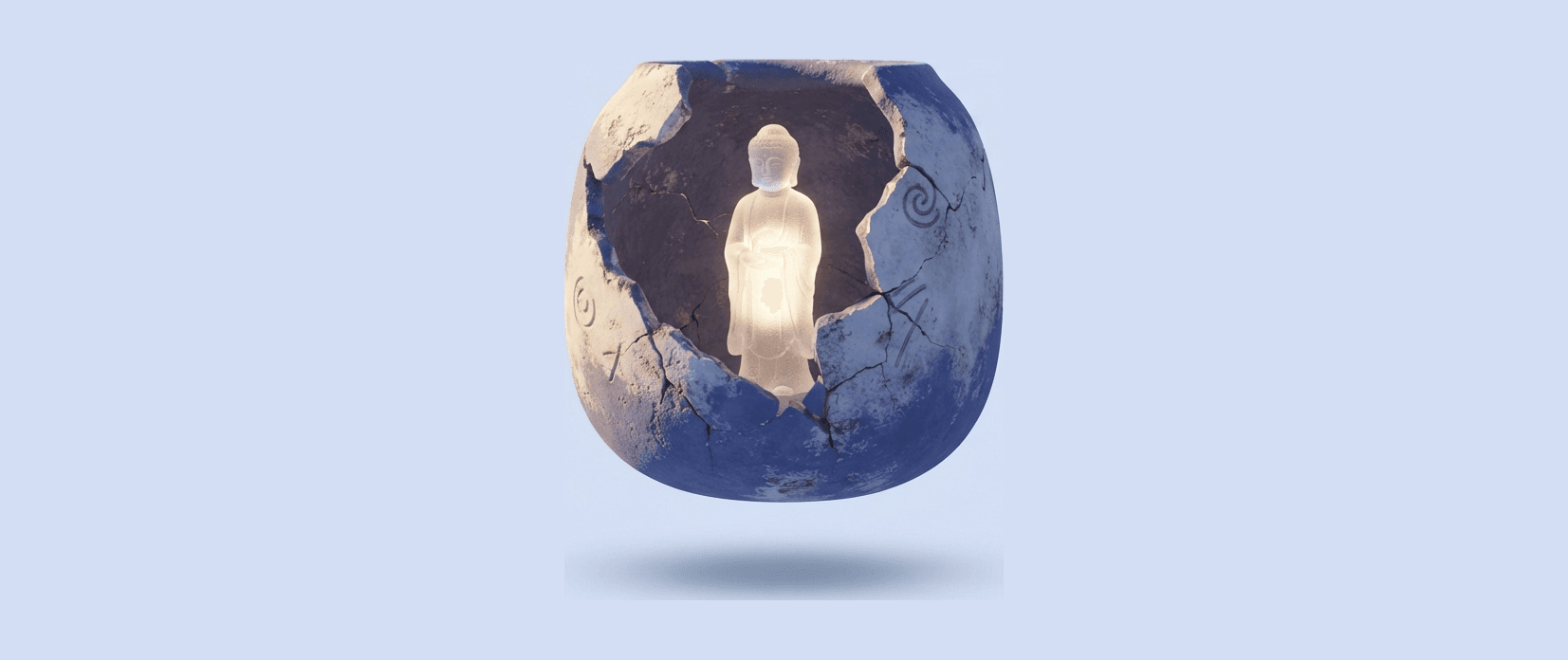
Separate the frame from the flame
When fear of loss grips you, distinguish what changes — body, role, circumstance — from the awareness that watches it all change. Rest your sense of self in the watcher, not the watched.
- What in me is changing?
- What in me is doing the noticing?
Let the dread of ending loosen
Face the thing you dread as an ending. Ask whether what you most are — the awareness itself — is truly what is threatened. Meet the moment from that steadier ground.
Then act, freed from fear
Once the deepest part of you is known to be safe, take up the task in front of you without the paralysis that fear of loss brings.
Death hath not touched it at all, dead though the house of it seems.
 bite.cards © 2026