

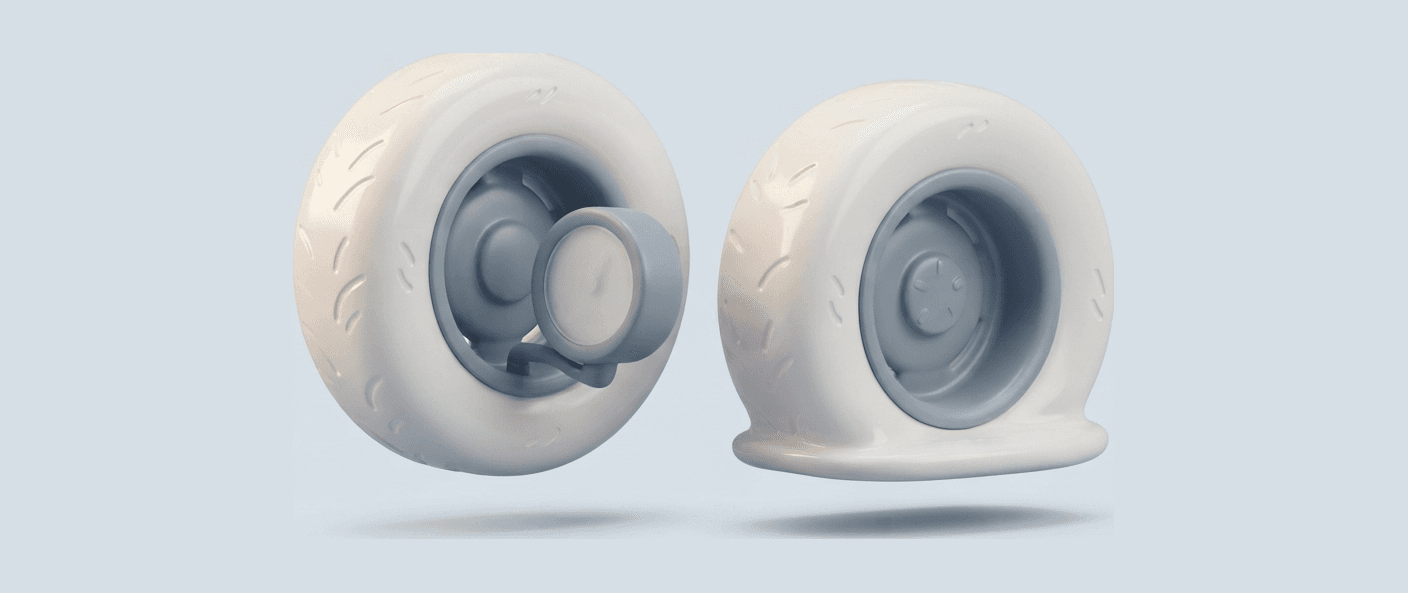
Check Your Tire Pressure
Tires are the only part of your car touching the road, and they quietly lose air. Correct pressure pays off in safety, tire life, and fuel economy at once.
Air pressure decides how a tire grips, brakes, and steers. Too low and it overheats and wears at the edges — the setup for a blowout. Too high and grip shrinks to a strip.
Getting it wrong costs you three ways: longer stopping distances, early tire wear, and worse fuel economy. A tire can look fine and still be well under pressure.
The number that matters is your carmaker's spec, not the sidewall figure — that one is a maximum. Yours is on a sticker in the driver's door jamb and in the manual.
Set them to the right number
Find your car's real spec
Open the driver's door and read the pressure sticker on the jamb, or check your owner's manual. Use that number, never the maximum stamped on the tire's sidewall.
- Door-jamb sticker or manual, not the sidewall
- Note that front and rear may differ
Check them cold
Measure before you drive or after the car has sat for hours. Driving warms the air and inflates the reading, so a cold check is the honest one. Don't forget the spare.
Make it a monthly habit
Pressure drifts down on its own and drops faster in cold weather. Check with a gauge about once a month and before long trips, and top up to spec at any air pump.
A two-minute check with a cheap gauge protects your grip, your wallet, and your tires all at once.
 bite.cards © 2026