

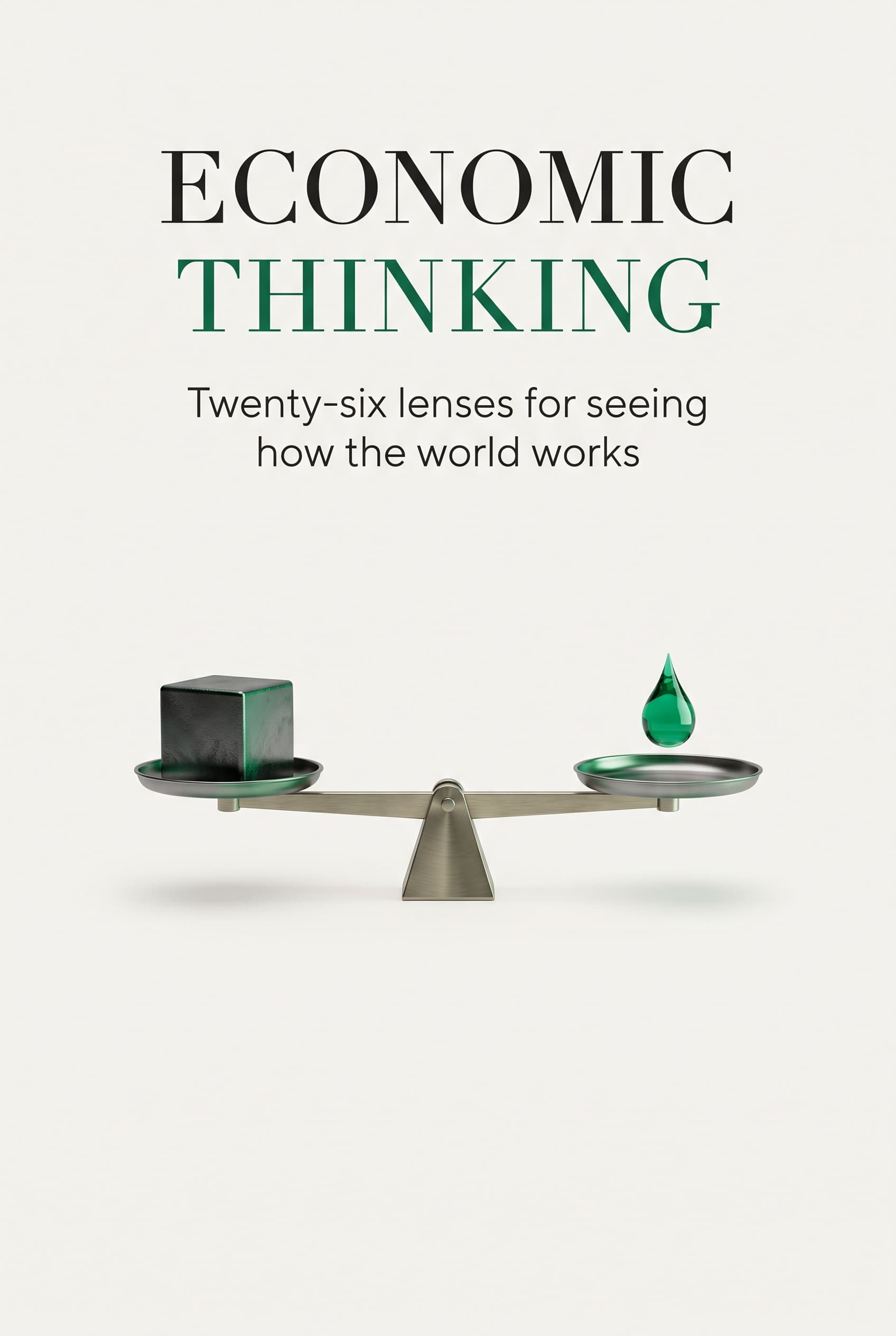

Scarcity Comes First
Economics begins with an uncomfortable fact: human wants always outrun the resources available to satisfy them. Every yes is a no to something else.
Scarcity is not poverty. A billionaire's money may be nearly limitless; her hours are not. Wherever wants exceed means, something must be given up.
So “should we do X?” is never the real question. The real one is “should we do X instead of the best thing we would give up for it?” Cost is the alternative displaced.
You see it daily: a packed calendar, a budget, a triage nurse. None are failures. They are the condition every system — market, family, or state — must answer.
Start every decision from scarcity
Name what the yes displaces
Before committing money, hours, or attention, write down the best alternative use you are giving up. If you can't name it, you haven't priced the decision — you've only admired it.
Rank, don't wishlist
Turn every budget — money, time, headcount — into an ordered list, not a pile of wishes. Scarcity means the line gets drawn somewhere; deciding where beats discovering where.
Treat time as the binding scarcity
Money can be earned back; hours cannot. Audit a normal week and ask which commitments would survive if you had to buy each one back at full price.
Nothing is free to a person who has other uses for their time and money — and everyone does.
 bite.cards © 2026