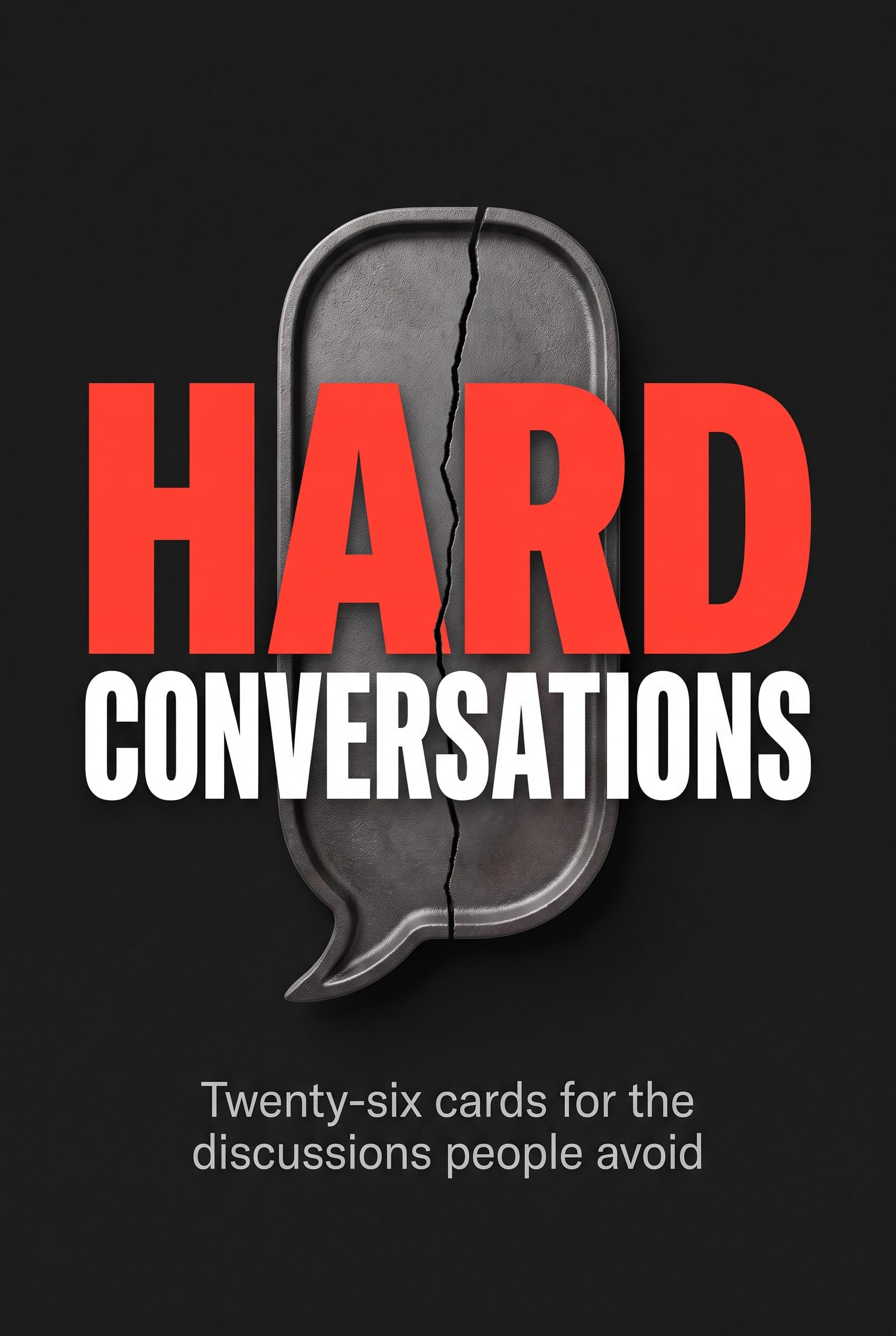

The Interest on Silence
Avoiding a hard conversation feels free because the cost is invoiced later. The problem persists, the resentment accrues — avoidance charges interest.
Every dodged conversation runs a quiet ledger. The behavior continues, because nobody named it. The resentment grows, because you're enduring it on purpose.
Its accounting is rigged: relief arrives instantly, the cost on a delay. Nobody avoids a conversation for a year — they avoid it today, three hundred times.
Pricing the silence breaks the spell. The question isn't whether the conversation is risky — it's whether it's riskier than another quarter of the status quo.
Audit what you're not saying
List the conversations you're avoiding
Write down every talk you've postponed more than twice — with a person's name on each. The list is usually shorter than the dread suggested, and one item is usually screaming.
Price the silence, not just the talk
For the loudest item, write two costs side by side: what the conversation could cost you, and what six more months of not having it will cost. Include what it's already costing — the energy, the workarounds, the distance.
- What has this silence cost me so far?
- Who else is paying for it?
- What does it cost at this rate by next year?
Book it before you feel ready
Put a date on the calendar and tell the person you'd like to talk. Readiness follows commitment, not the other way around — and a scheduled conversation stops accruing avoidance interest the moment it's booked.
The conversation doesn't get easier with time. It gets bigger.
 bite.cards © 2026