

Build a Starter Toolkit
Most common fixes need only a modest, well-chosen kit. Using the correct tool isn't about looking the part — it's how a job stays safe.
The wrong tool is how simple jobs go wrong: a screwdriver used as a pry bar slips; a mystery wire touched without a tester shocks you.
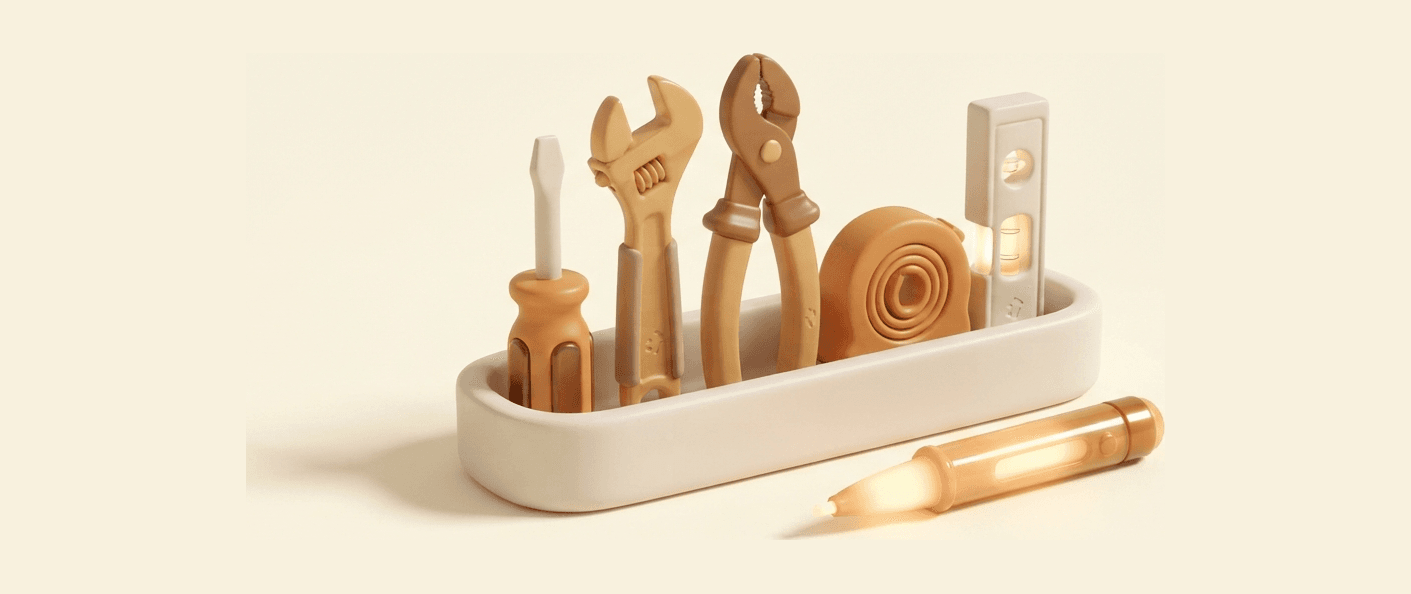
A capable starter set is short — Phillips and flat screwdrivers, an adjustable wrench, tongue-and-groove pliers, a tape measure, a level, a stud finder, a utility knife, and a cordless drill.
Two essentials matter most: a non-contact voltage tester, which turns electrical work into a verified-safe task, and knowing where your breaker panel and main water valve are.
Assemble the essentials
Get the safety gear first
Before any repair tools, own the ones that keep you safe: safety glasses, gloves, a flashlight, and a non-contact voltage tester. Find your breaker panel and main water shutoff now, while nothing is wrong.
- Voltage tester — never assume a wire is dead
- Know your breaker panel and main water valve
Add the everyday hand tools
Cover the common jobs with a compact core: Phillips and flat screwdrivers, an adjustable wrench, tongue-and-groove pliers, a tape measure, a level, a stud finder, a utility knife, and a cordless drill.
Let the missing tool be a signal
If a job clearly needs specialized equipment you don't own and can't safely improvise, treat that as information. Rent it, learn it, or call a licensed pro — never force a fix with the wrong tool.
A voltage tester and knowing where your shutoffs are keep you safer than any other tool you own.
 bite.cards © 2026