

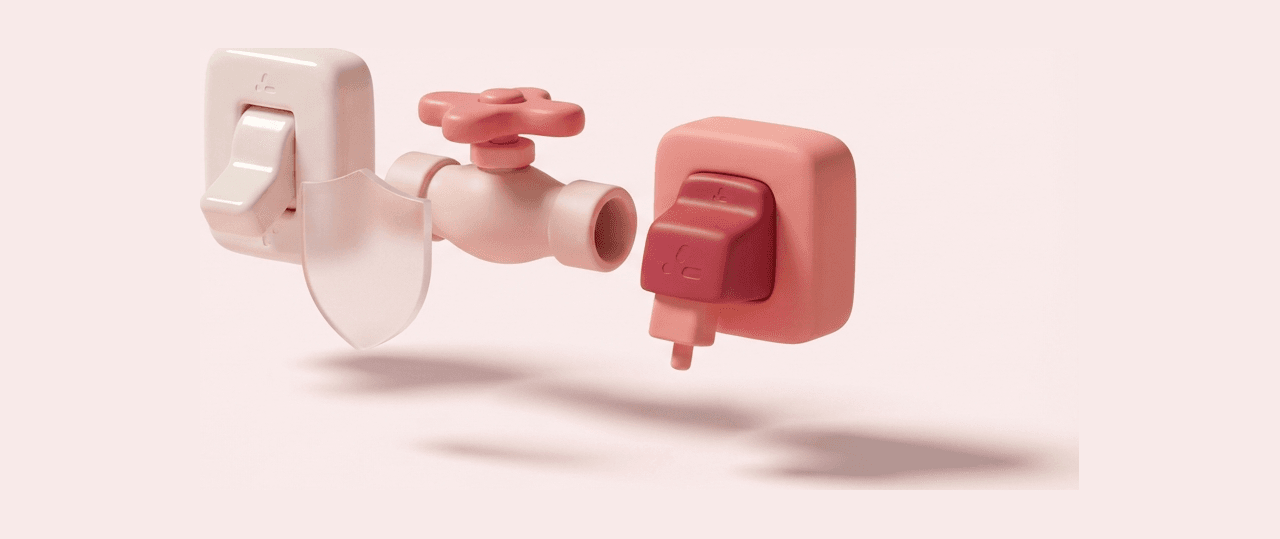
Make It Safe First
Before a wrench touches anything, the energy has to be off — the power, the water, the moving parts. The make-safe step is the repair.
Most home-repair injuries come from working on something still live: a wire carrying current, a pipe under pressure, an appliance plugged in.
Electrical: switch off the correct breaker, then confirm the circuit is dead with a non-contact voltage tester. A wall switch is not proof. Plumbing: close the shutoff and open a faucet to bleed pressure. Appliances: unplug them.
Protect yourself too — eye protection, a dry work area, good light. And if you can't make a job safe, that is itself the signal to stop.
Kill the energy before you begin
Shut off power, water, or the plug at its source
Match the job to its make-safe move first: cut the right breaker, close the shutoff, or pull the plug.
- Electrical: the right breaker OFF, not the switch
- Plumbing: fixture shutoff or main valve closed
- Appliances: unplugged, not just powered down
Verify it is actually dead
Prove the power is off with a voltage tester before touching wiring, and open a faucet to bleed the pressure. Assume live until proven dead.
Set up to protect yourself
Eye protection, a dry and well-lit area, one job at a time. If you can't make a task safe, or don't know what a wire or valve controls, stop and call a licensed pro.
A pro's first move is never the repair — it's making the thing safe to touch.
 bite.cards © 2026