

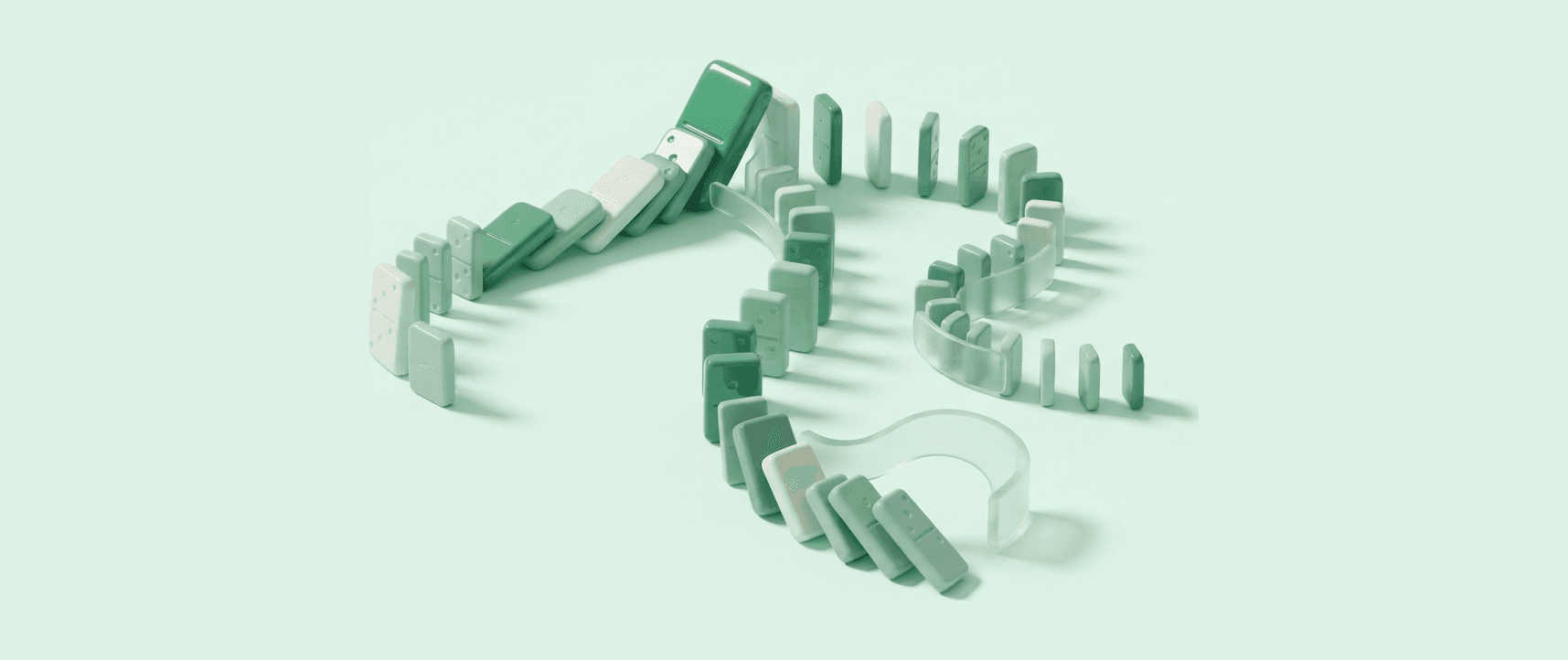
Second-Order Thinking
The first consequence of a choice is obvious. The consequences of that consequence are where the real outcomes — and the real edge — live.
Everyone sees the immediate effect of a choice. Far fewer trace what that effect causes next — and what that causes after that.
Many bad decisions look brilliant in the first order: the discount that wins the quarter and trains customers to wait for the next one.
So keep asking “and then what?” until the chain stops. It is a quiet, durable edge — not because it is hard, but because almost no one bothers.
Trace the ripples
Name the first effect
What happens immediately if you do this? This is the part almost everyone already sees.
Push to the next order
Ask “and then what?” at least three times, following each answer forward in time.
- Who reacts, and how?
- What does this incentivize later?
Weigh the full chain
Judge the decision by where the chain ends, not by how good the first step feels. A worse first step with a better chain is usually the right call.
First-order winners and second-order losers are everywhere. Count further than the crowd.
 bite.cards © 2026