

Keep Your Following Distance
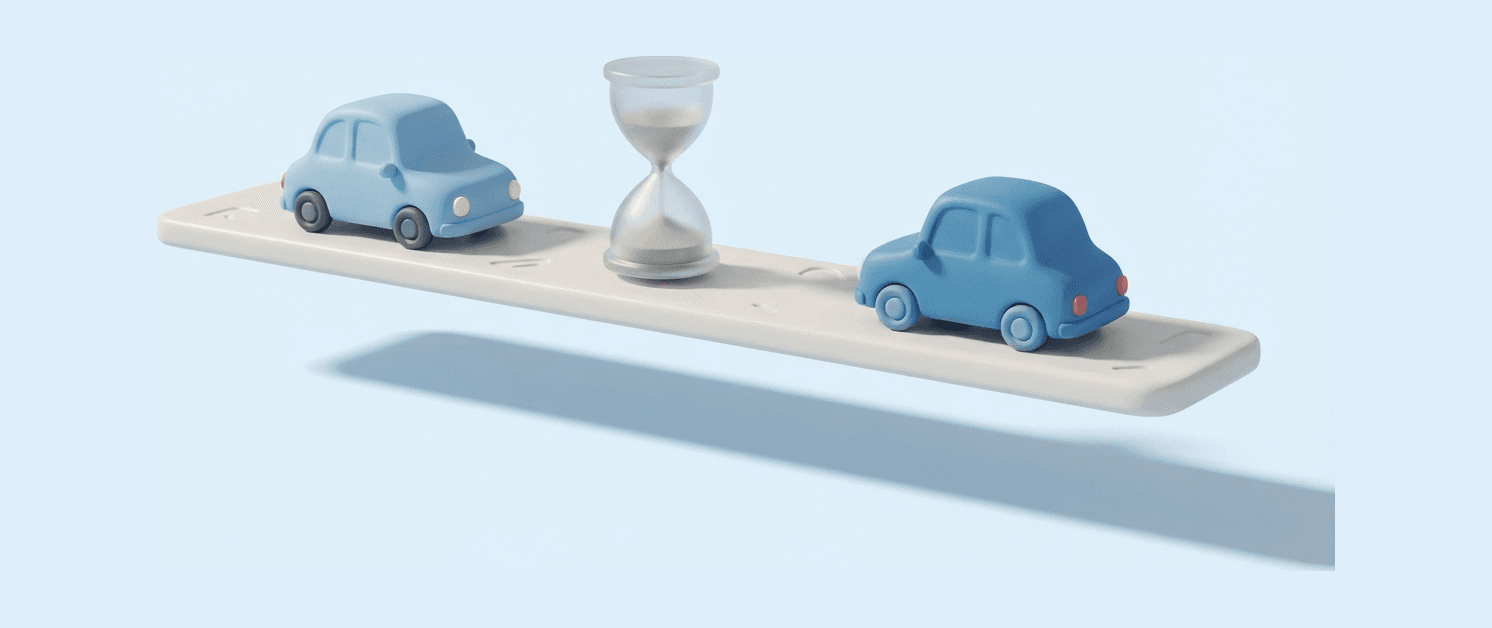
The space in front of you is your time to react. Measured in seconds rather than car lengths, that gap lets you stop when the car ahead stops suddenly.
Most rear-end crashes come down to no room. When the car ahead brakes hard, the distance you left is all the time you get to react and stop.
Seconds beat car lengths because they scale with your speed. Pick a fixed object ahead and count the gap after the car in front passes it. A few seconds is the common rule of thumb; widen it in rain, fog, or dark, and confirm the count in your handbook.
This one habit turns near-misses into non-events. The driver who leaves space is never surprised by a sudden stop.
Count the gap
Measure your gap in seconds
When the car ahead passes a fixed point, count the seconds until you reach the same point. If it is under a few seconds, ease off and let the gap grow.
- Count in seconds, not car lengths
- Check the specific gap your local handbook teaches
Add more space when conditions worsen
Double or more your usual gap in rain, snow, fog, darkness, or heavy traffic. Poor grip and poor visibility both mean you need extra time to react.
Let tailgaters pass
If someone crowds you from behind, do not speed up or brake-check them. Slow gently and give them room to go around, so their following mistake cannot become your crash.
The space ahead of you is time you are saving for the moment you will need it most.
 bite.cards © 2026