

Right-of-Way Is Given, Not Taken
Right-of-way is something you give, never something you take. The rules say who should yield, but they cannot make another driver do it.
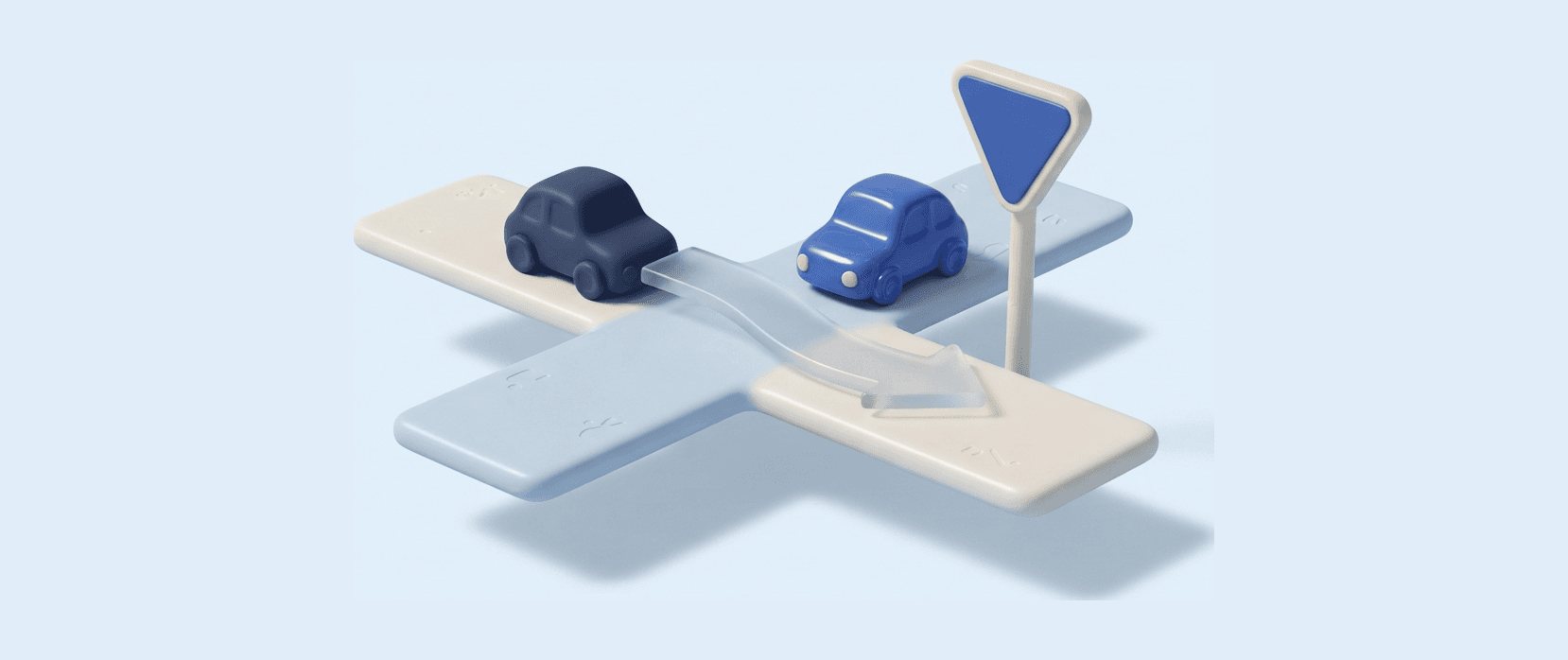
Traffic law assigns right-of-way so intersections stay orderly: where two paths cross, someone goes first and someone waits. But it only says who should yield.
That gap between rule and reality is where crashes happen. Pushing into the path of a driver who is not yielding wins the argument and loses the collision.
So treat right-of-way as a courtesy you extend, not a prize you claim. When it is unclear who should go, give it up. Yielding costs seconds; taking what is not freely clear can cost far more.
Give way to stay safe
Yield even when you are right
If another driver is moving into your path, let them — whatever the rule says. Your goal is to arrive safely, not to be proven correct at the scene of a crash.
- Right-of-way is given, never taken
- Being right does not stop a collision
Confirm the other driver has seen you
At intersections, look toward the other driver before you commit. If you cannot tell they have noticed you, assume they have not, and wait until you are sure.
Never force a gap
When it is genuinely unclear who should go, the courteous and defensive move is to let the other driver through and follow. Two drivers waving each other on is far safer than two insisting.
The rule tells you who should yield. The safe driver is the one willing to yield anyway.
 bite.cards © 2026