

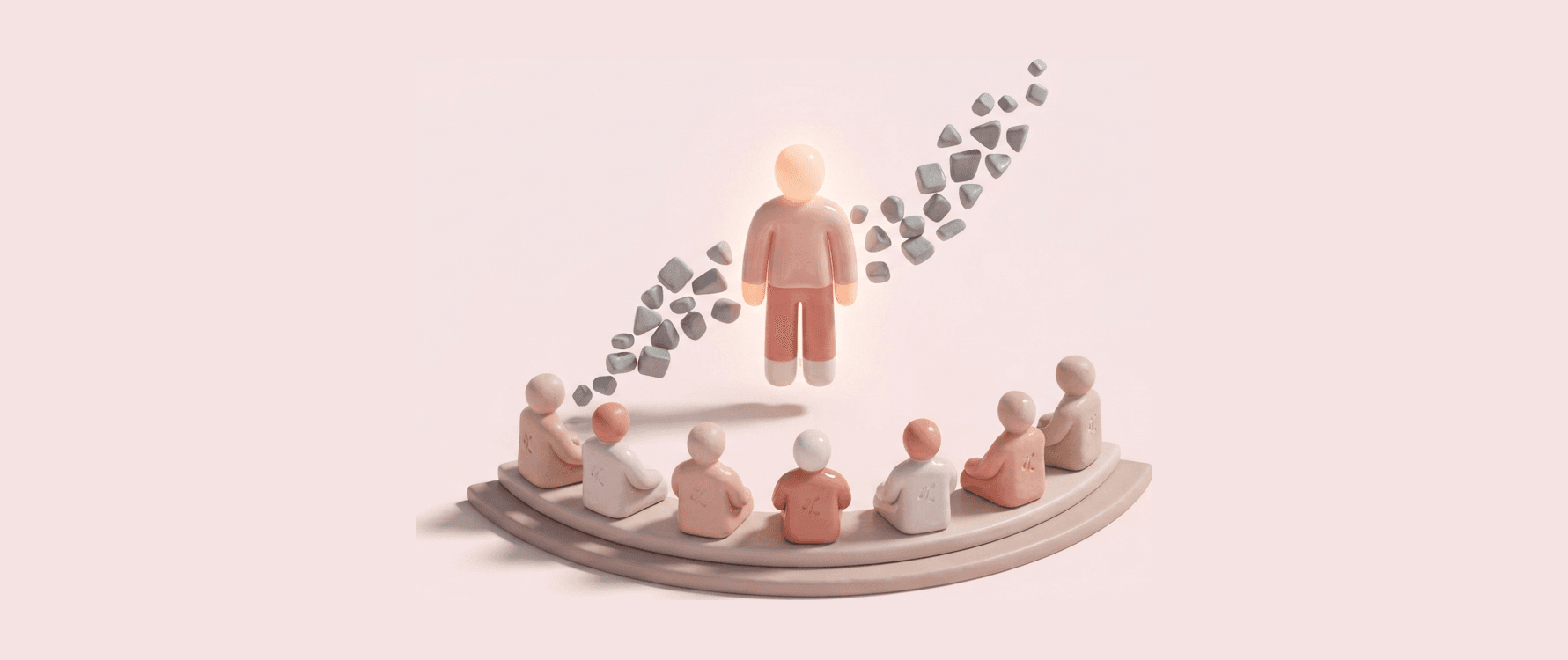
People, Not Events
Audiences do not follow plots. They follow people. Establish someone worth caring about before anything happens, or nothing that happens will matter.
Strip any beloved story to its events and it reads like a police report. What made it beloved was the someone it happened to: a want, a flaw, a face.
Attention comes with tracking machinery for agents, not incidents. We read intentions and feel outcomes on behalf of whoever we've locked onto — the same event slides off a stranger.
So: character first, then plot. A project update lands harder as "what Maya walked into on Monday" than as "what the system did."
Give the story a face
Choose one person to carry the story
Not "the team," not "users" — one named human whose experience the audience can ride. Groups are scenery; a person is a vehicle.
Give them a want and one telling detail
State what they were after and add a single specific that makes them real — the triple-checked spreadsheet, the daughter's recital they were about to miss. One detail buys the caring.
Route every event through their experience
Don't narrate what happened; narrate what happened to them — what they saw, decided, and felt at each beat. Events without a witness are trivia.
The plot is what happens. The story is who it happens to.
 bite.cards © 2026