The Mind's Native Format
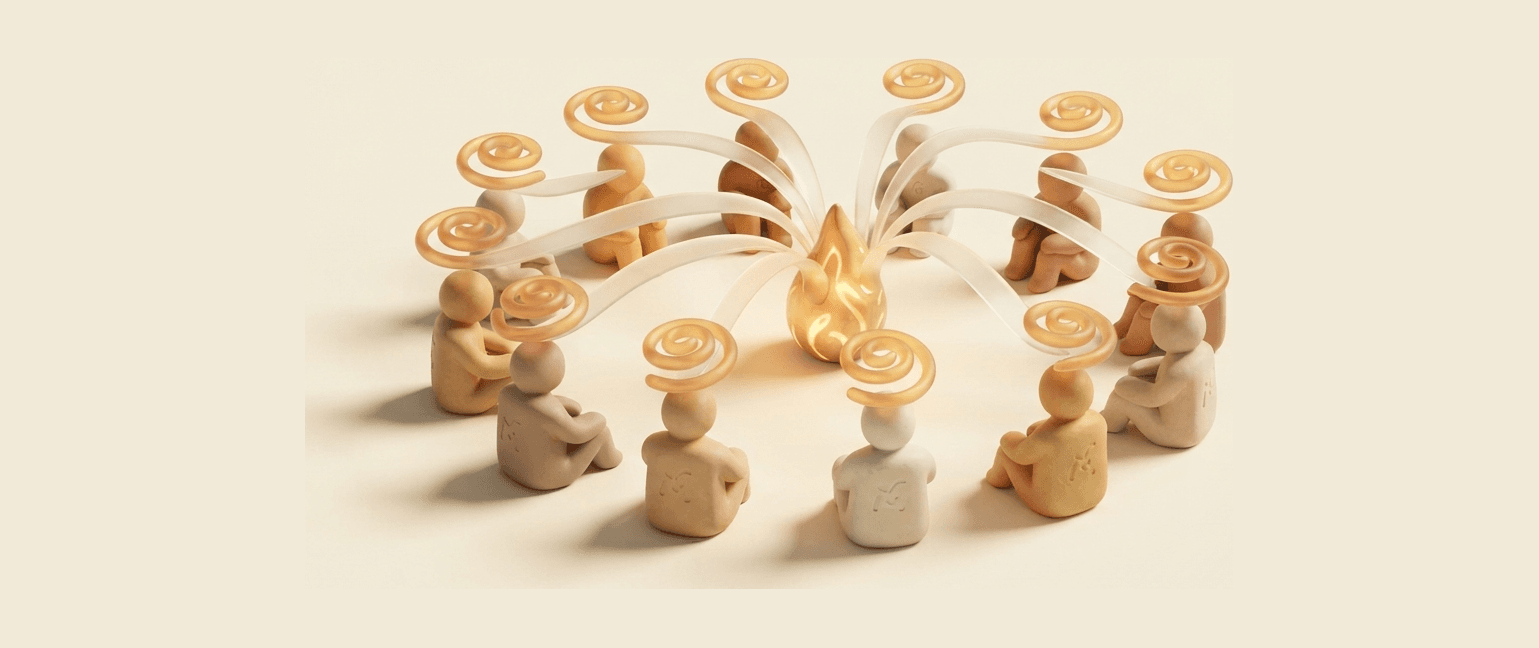
A story is not decoration wrapped around information. It is the format the mind already uses to store experience — which is why ideas travel farther inside one.
Long before writing, minds kept knowledge as narrative: who wanted what, what stood in the way, what happened next. Cause and effect, agents and outcomes — the shape memory holds best.
A listener absorbed in a story doesn't process it; they simulate it. Images form and feelings fire as if the events were their own. A fact arrives labeled. A story arrives lived.
So the question is never whether to add a story. It is to find the one already inside the material — the only part the room will still carry tomorrow.
Package ideas the way minds keep them
Find the story already in the material
Before building slides or arguments, ask the narrative questions of your content. If there are answers, you have a story; if not, keep digging.
- Who wanted something here?
- What got in the way?
- What happened because of it?
Tell it as events in time, not points in a list
Order beats by when they happened, not by topic. "First we believed X, then Tuesday broke that, so we changed Y" outlives any bulleted summary of the same facts.
Test it against tomorrow
A day after you tell it, ask someone what they remember. If they retell events, the format worked. If they recite your conclusion without the journey, it hasn't become theirs yet.
People forget your point. They retell your story — and the point rides inside it.
 bite.cards © 2026