

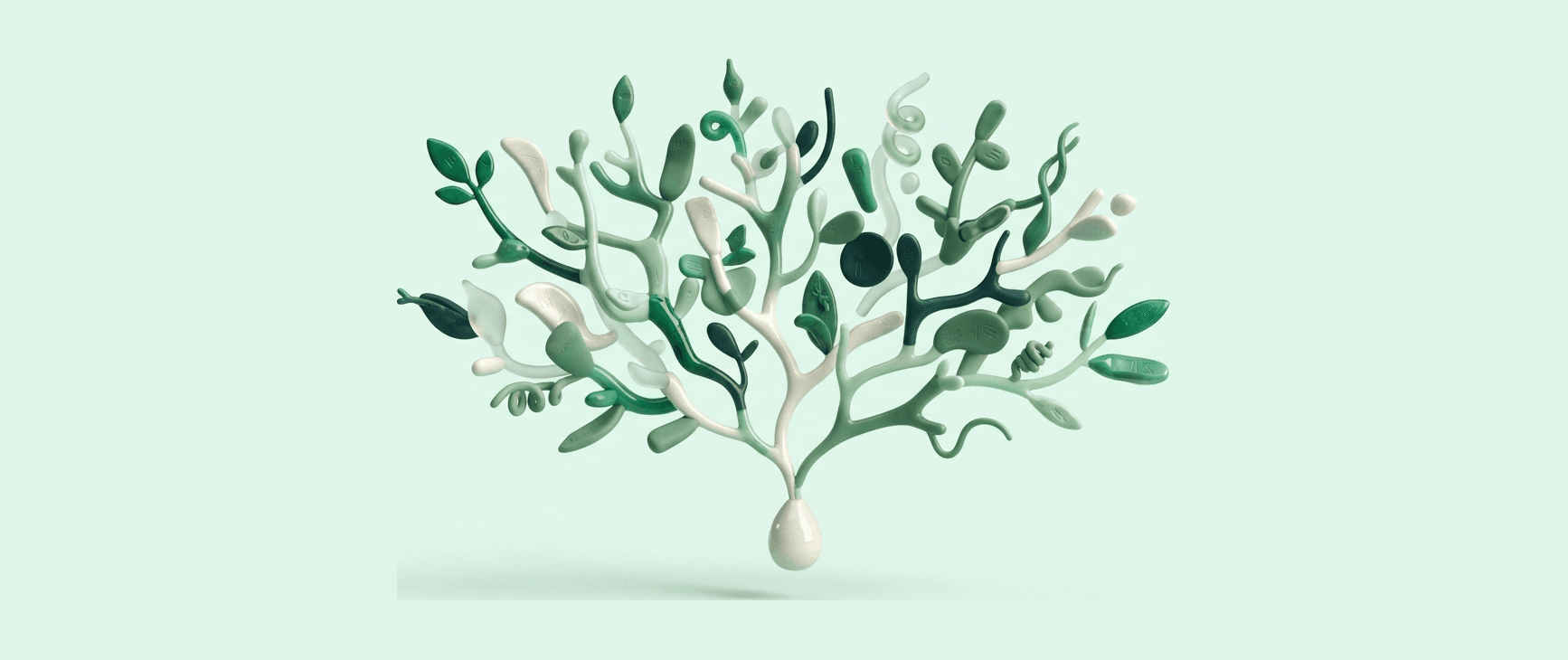
Descent with Modification
Species are not fixed and separately created: they descend one from another, changing over time. All life shares a common ancestry.
Before Darwin, naturalists held that each species was separately and permanently created. Darwin proposed something stranger: today's forms descend, with modification, from earlier ones.
He rarely used the word “evolution.” His phrase was “descent with modification” — small inherited changes accumulating, over vast time, into new forms.
Follow the branches back far enough and they converge. “Probably all the organic beings which have ever lived on this earth have descended from some one primordial form.”
Think in descent, not design
Ask where a form came from
Faced with any living thing, don't ask only what it is for — ask what it descended from, and what small changes shaped it.
- What might its ancestor have looked like?
Read resemblance as kinship
Treat similarity between species as a clue to shared ancestry, not coincidence. The closer the likeness, the nearer the common ancestor.
Give change enough time
Tiny differences look trivial year to year. Extend them over geological ages and they compound into the whole diversity of life.
Probably all the organic beings which have ever lived on this earth have descended from some one primordial form.
 bite.cards © 2026